Your Cart is Empty


Inversion tables use gravity to gently stretch your spine and ease back tension. The Best Fitness BFINVER10B folds flat for home use; the Body-Solid GINV50 is a heavier-duty table rated for clinics and rehab, with a lifetime frame warranty. Both ship free Australia-wide.
Check three things: that it fits your height and weight, how it holds your feet, and whether you need it to fold away.
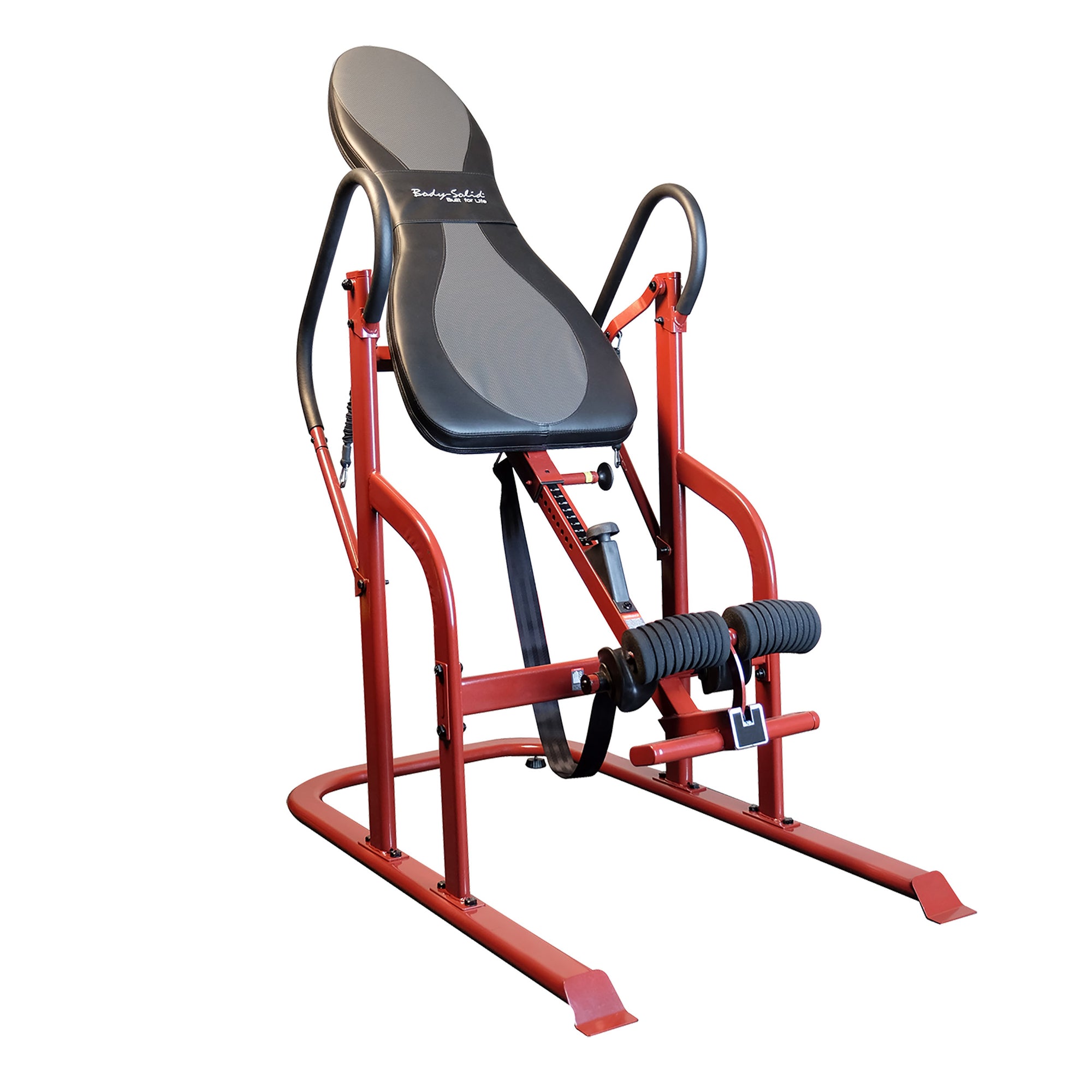
The Best Fitness BFINVER10B is our home inversion table. Adjustable ankle cuffs hold your feet, a spring-loaded safety strap controls how far you tip back, and it folds flat with two pins to store in a cupboard. It fits users from 1.47 m to 1.98 m tall and up to 113 kg.
The Body-Solid GINV50 is the heavier-duty table: an extra-sturdy heavy-gauge steel frame, thick padding and a patented molded foot mechanism. It takes users up to 136 kg, is rated for light commercial use and carries a lifetime frame warranty, so physios, chiropractors and rehab clinics use it too.
| Inversion table | Holds your feet with | User height | Max user | Size (L × W × H) | Rated for | Frame warranty |
|---|---|---|---|---|---|---|
| Best Fitness BFINVER10B | Adjustable ankle cuffs | 1.47–1.98 m | 113 kg | 120 × 76 × 153 cm | Home | 3 years |
| Body-Solid GINV50 | Molded foot mechanism | 1.5–2 m | 136 kg | 183 × 71 × 201 cm | Light commercial | Lifetime |
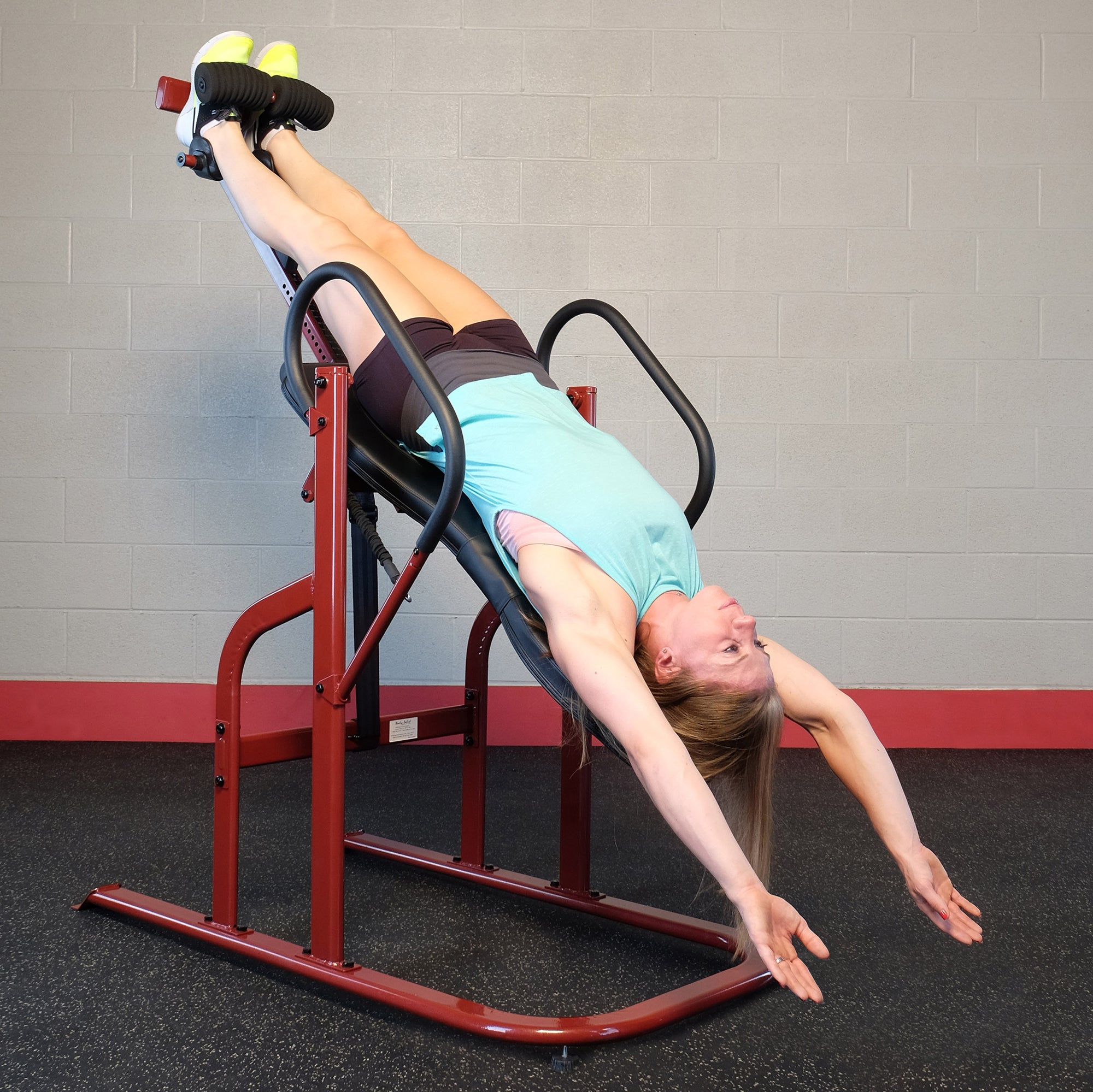
It lets you tip back so your head is lower than your feet, and gravity gently stretches your spine. People use it to ease back and neck tension after a long day, sitting or lifting.
Start at a gentle angle for a minute or two, come back upright slowly, and build up over several sessions. Set the safety strap before you tip back, and follow the angles and times in the manual.
Inversion isn't right for everyone. Talk to your doctor before you start if you're pregnant, or have high blood pressure, glaucoma or another eye condition, a heart or circulation problem, or a recent injury or surgery.
Yes. Both tables ship free Australia-wide from our Adelaide warehouse, in one box.